How to Create Textured Abstract Backgrounds and Paint Over Them | Art Demonstration
TL;DR - Abstract Realism Technique
In this live art demonstration, Ian Wilson Pope showed how to create textured abstract backgrounds using acrylic mediums, cardboard, and household tools — before painting a realistic owl over the surface. The session focused on loosening up, reducing perfectionism, and working "big shapes first." This method helps artists break creative block while producing visually striking mixed media paintings.
What Was This Art Demonstration About?
This two-part demonstration explored a process Ian calls "abstract realism."
The idea is simple but powerful:
- Create a textured, abstract surface first
- Let go of perfection and outcome
- Then paint a realistic subject over the top
The result is a painting with physical depth, layered history, and expressive energy — but grounded in recognisable form.
The demonstration took place within a local art group setting, offering practical insight for painters across Surrey and South London who want to experiment with texture and mixed media without losing structure.
Why Start With Texture Before Painting the Subject?
Many artists experience creative pressure.
The desire to produce "your best work ever" can actually stop you painting altogether. Research in creative psychology supports this: perfectionism is strongly linked to creative paralysis and avoidance behaviour (Flett & Hewitt, 2014).
By beginning with texture and abstraction:
- You remove the pressure of accuracy
- You allow chance effects
- You create something to respond to rather than something to control
This shifts painting from performance to exploration.
As Ian explained, sometimes you don't even know what the final subject will be when preparing the canvas. The textured surface becomes a starting point for possibility.
How Do You Create a Textured Abstract Background?
Step 1: Add Physical Texture
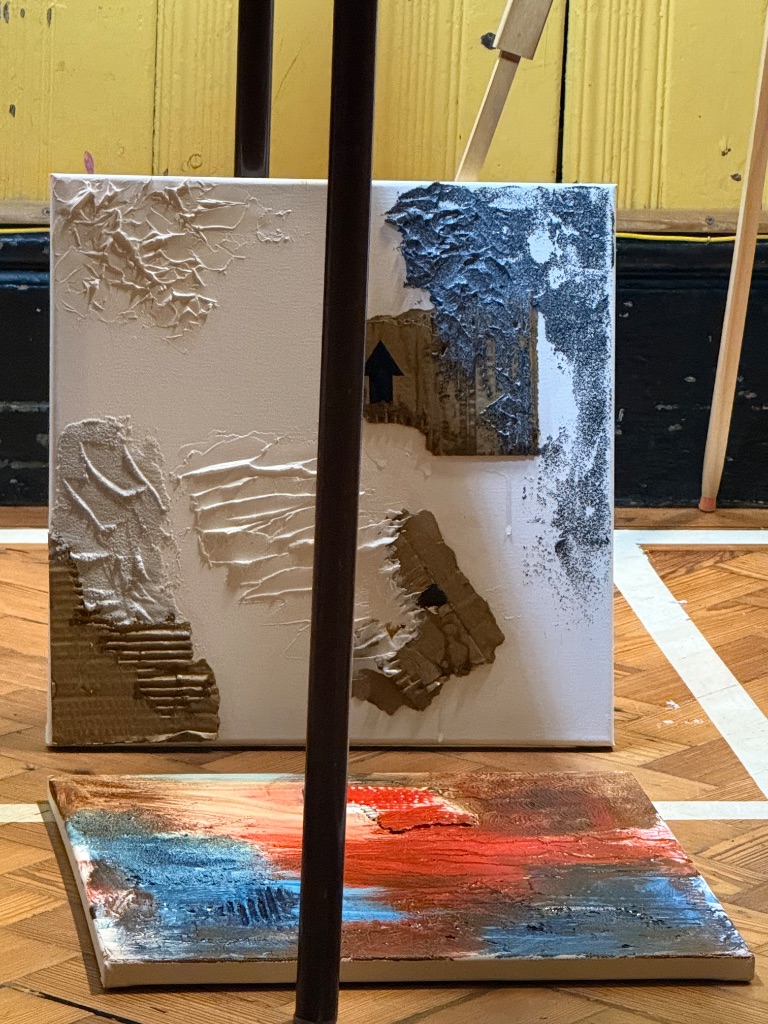
The demo used accessible, affordable materials:
- Corrugated cardboard (from Amazon parcels)
- PVA glue
- Acrylic texture pastes
- Crackle paste
- Black lava gel
- Sand texture medium
- Coarse pumice gel
The cardboard was glued to canvas using PVA, then sealed with another layer of PVA to harden it.
Once dry (usually overnight), texture mediums were applied using:
- Palette knives
- Scrapers
- Silicone tools
- Squeegees
- Even household items
The key instruction: don't overthink placement.
Texture is not decoration. It is structure.
Step 2: Gesso the Surface
After drying, the entire surface was primed with acrylic gesso (black or white). Gesso helps paint adhere and unifies the surface.
A small amount of acrylic colour can be added to tint the gesso if desired.
Step 3: Add Abstract Colour Layers
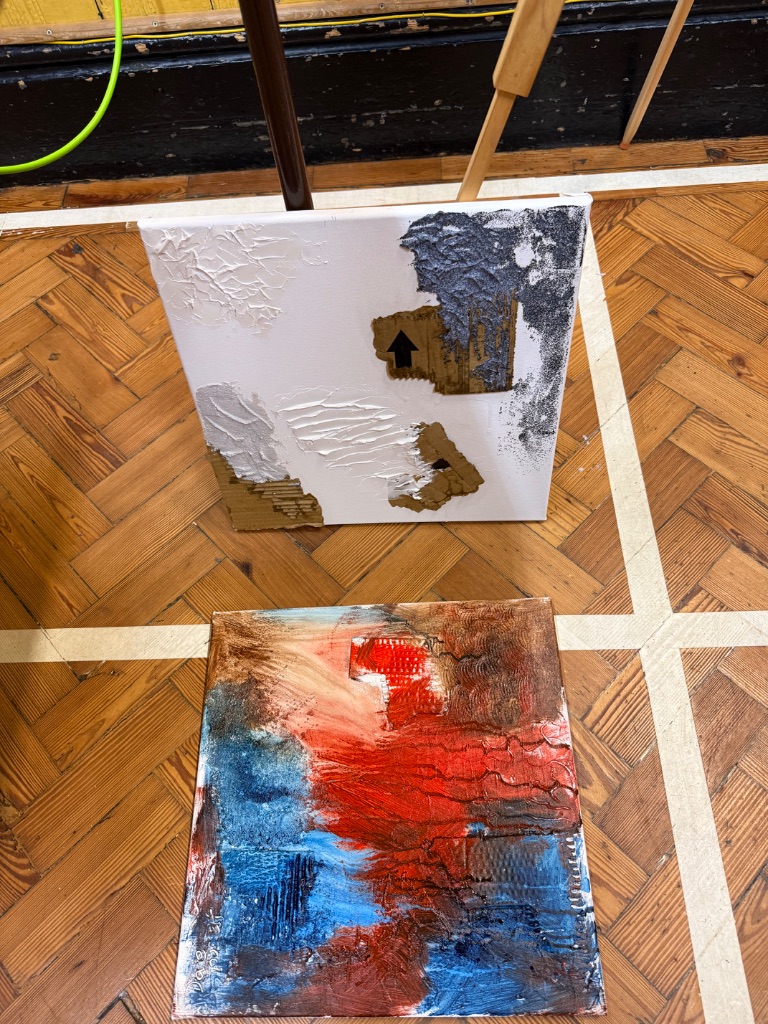
Using acrylic paints, Ian began with darker tones:
- Burnt umber
- Prussian blue
- Burnt sienna
- Vermilion
- Titanium white
Paint was applied loosely with old bristle brushes.
Water was sprayed onto the surface to encourage movement and blending.
This stage is intentionally uncontrolled.
Let the paint run.
Let colours mix naturally.
Let the surface surprise you.
Live Demonstration
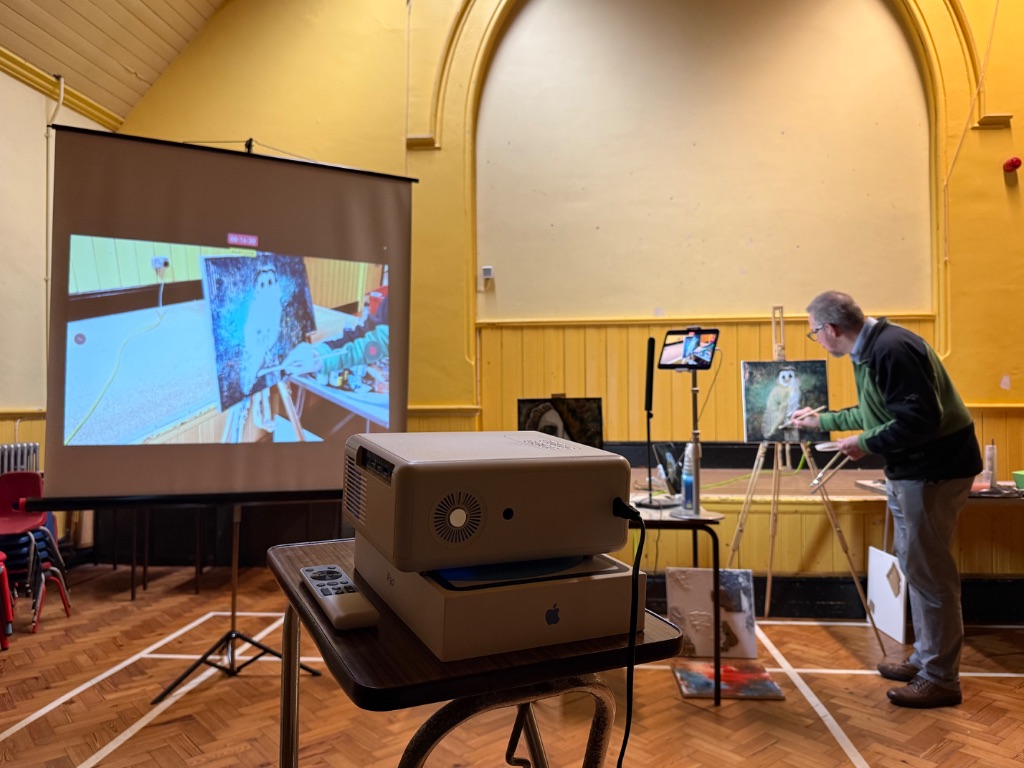
The demonstration took place at Holmwood Hall in Wallington, where Ian used a projector to show close-up detail of his painting process to the audience.
This setup allowed attendees to see brush techniques, colour mixing, and decision-making in real-time — invaluable for artists learning through observation rather than formal instruction.
What Is "Abstract Realism"?
Abstract realism combines:
- An expressive, non-representational background
- A recognisable, realistically painted subject
The textured ground creates depth and emotional atmosphere.
The subject — in this demo, an owl — anchors the composition.
This technique echoes historical painting traditions. Many Old Masters built textured grounds using chalk, gesso, and layered imprimatura before adding figures.
Modern acrylic mediums allow artists to achieve similar dimensionality without traditional oil preparation.
Painting Over Texture: The Owl Demonstration
Big Shapes First
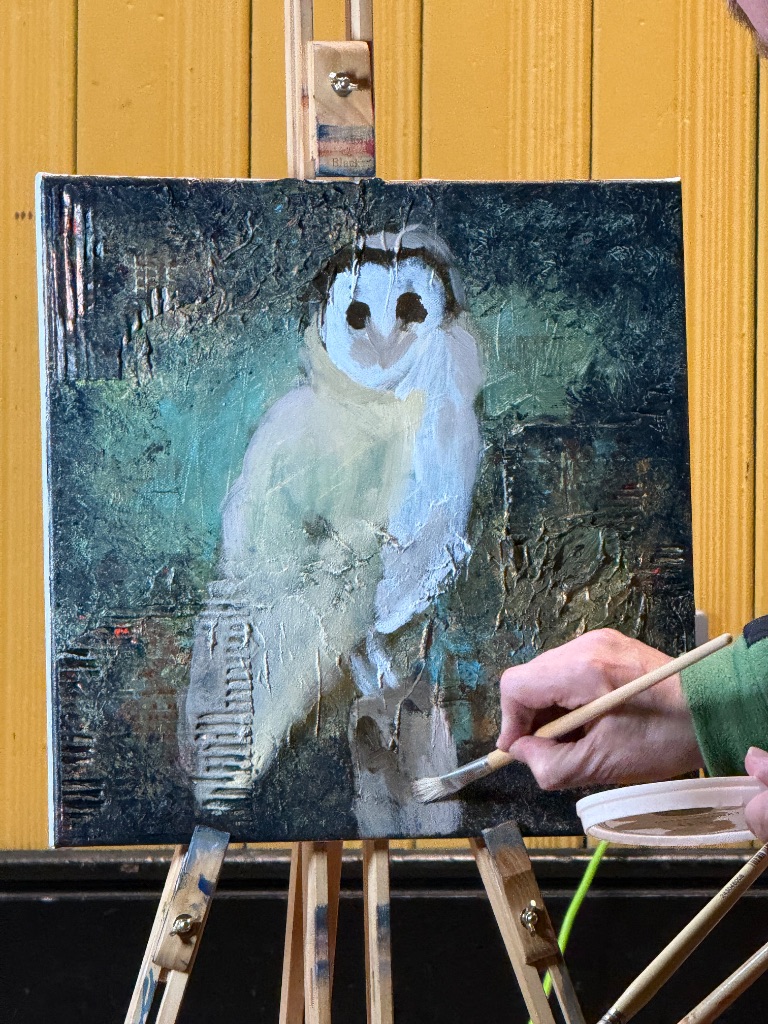
In Part Two, Ian demonstrated painting an owl over the abstract background.
The most important principle:
Get the big shapes right first.
If large shapes are correct, smaller details naturally fall into place. If small details are correct but misplaced, proportions fail.
This is consistent with classical atelier training and perceptual drawing research.
Midtones Before Extremes
Another key teaching:
Start in the mid-value range.
Instead of jumping straight to bright highlights or deep shadows, build gradually outward. This keeps values harmonious and prevents over-contrast early on.
Working With Texture
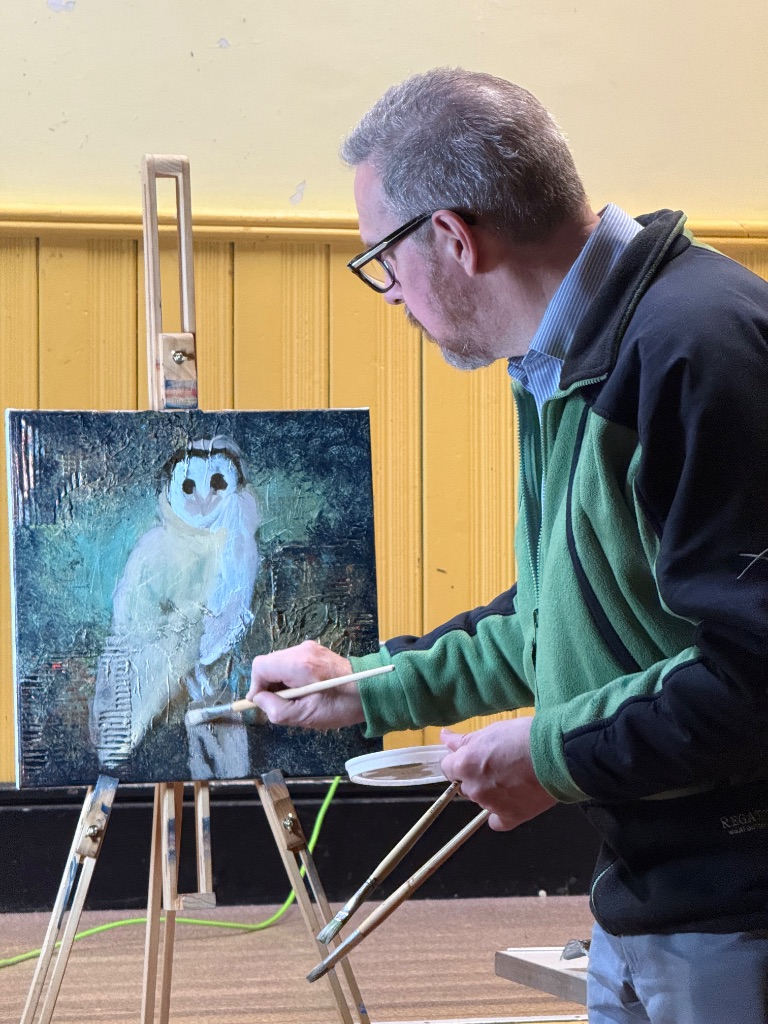
Painting over a textured surface changes brush behaviour:
- Edges may break naturally
- Paint catches on raised areas
- Blending behaves differently
Rather than fighting this, embrace it.
Texture can create organic feather effects and broken colour transitions that would be difficult to replicate artificially.
Acrylic First, Oil Later (Optional)
Ian often builds the first layers in acrylic and then refines with oil paint if desired.
This is structurally safe because acrylic dries quickly and forms a stable base layer.
Oil should always be applied over acrylic — never the reverse.
The Finished Painting
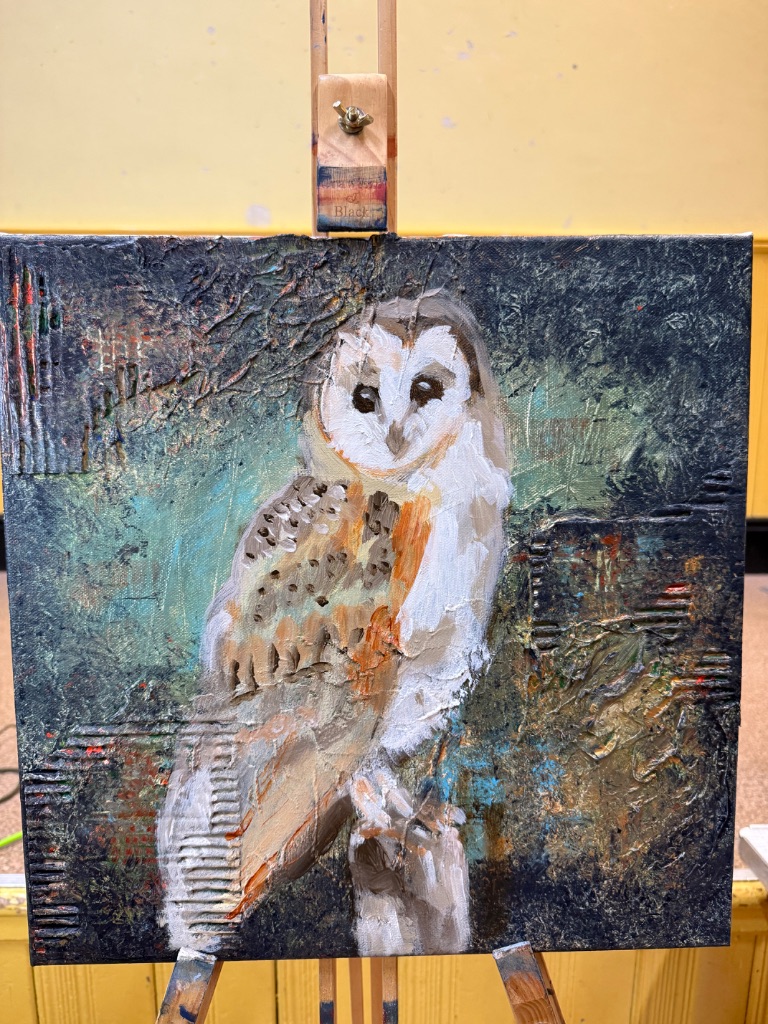
The final painting showcases the power of combining abstract texture with realistic form. The owl emerges from the layered, textured background, creating depth and visual interest that wouldn't be possible on a flat, uniformly painted surface.
Why Is This Method So Effective for Creative Block?
This approach works because:
- It removes outcome pressure
- It introduces unpredictability
- It shifts focus from perfection to play
- It encourages physical engagement with materials
Studies in embodied cognition suggest that tactile engagement increases creative flow states.
When artists touch, scrape, and manipulate surfaces, they often experience reduced overthinking and increased intuitive decision-making.
Practical Advice for Artists in Surrey & South London
If you're part of a local art society or painting at home, try this:
- Prepare 2–3 textured canvases in advance
- Leave them to dry fully
- On days you feel stuck, simply add colour
- Don't decide the subject immediately
Let the surface guide you.
This is especially helpful during winter months when motivation dips or when preparing for exhibitions across Surrey art groups.
Frequently Asked Questions
Can you paint oil over acrylic texture?
Yes. Acrylic dries into a stable surface. Oil paint can be applied on top once fully dry.
Do I need expensive texture mediums?
No. Cardboard, PVA glue, sand, and household tools can achieve similar effects.
How long should texture dry?
Allow at least 12–24 hours for texture paste to dry fully before priming.
Will crackle paste always crack?
Crackle depends on thickness. Thicker applications create larger cracks.
Should I frame textured paintings?
Many artists prefer leaving edges visible to showcase the dimensional surface.
About the Artist
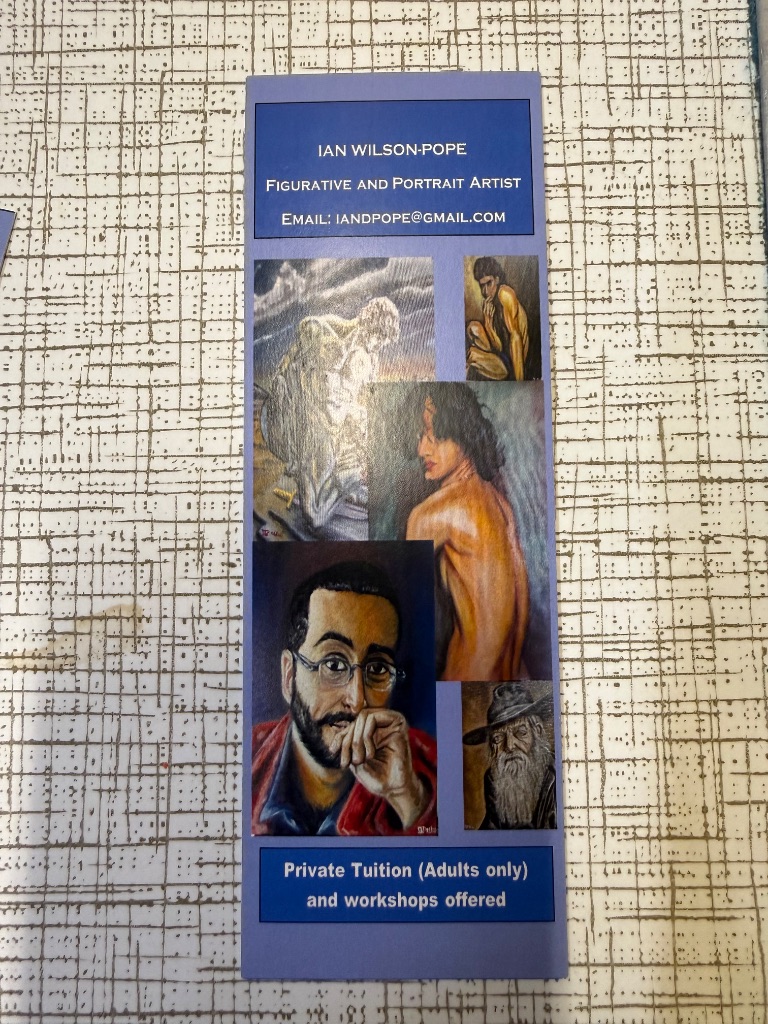
Ian Wilson Pope
Figurative and Portrait Artist
Ian specializes in figurative work and portraiture, combining traditional techniques with contemporary mixed media approaches. His work explores the intersection of abstract expressionism and realistic representation.
Connect with Ian:
- 📧 Email: iandpope@gmail.com
- 📱 Instagram: @iandwilsonpope
Private tuition (adults only) and workshops offered.